

Trending Now
 Delhi unveils ambitious Urban Mobility Vision: Luxury Metro Coaches, New Tunnels and Pod Taxi
 Qatar approves Saudi Rail Link Agreement, Accelerating Gulf Railway Vision 2030
 UP Govt plans to introduce Water Metro services in Ayodhya, Varanasi & Prayagraj
 India’s First Urban Ropeway begins Trial Run in Varanasi, Set to carry 1 Lakh passengers daily
 India and Bhutan to Build First-Ever Rail Link: ₹4,033 Cr Project to Boost Regional Connectivity
- Patna to launch Eco-Friendly Water Metro; Trial Run soon between Digha and Kangan Ghats
 Air India Group set to launch Flights Operations from Navi Mumbai International Airport
 Chennai to launch 25-Year Mobility Plan with Unified QR Ticketing and One-App Transit System
 Kochi Metro bags ₹4.4 crore contract to prepare DPR for Mumbai Water Metro Proejct
 Navi Mumbai International Airport set for September launch; IndiGo and Akasa Air to lead Operations
Feasibility study of New Delhi-Mumbai High Speed Rail corridor completed
Anushka Khare
Posted on: 2020-07-06 06:43:49
Viewer: 2,461
Comments: 0
Country: India
City: New Delhi
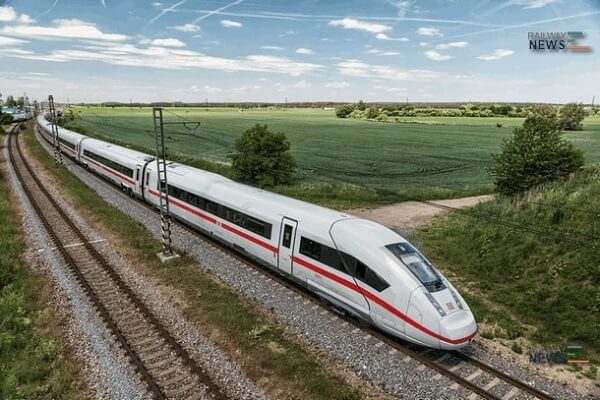
New Delhi, India (Urban Transport News): A consortium of M/s The Third Railway Survey and Design Institute Group Corporation (CHINA) and Tractebel Engineering India Private Limited (previously known as Lahmeyer International India Pvt. Ltd.) has submitted its report to High Speed Rail Corporation of India Limited (HSRC). The consortium was appointed as a consultant to conduct feasibility study of which was appointed to conduct a feasibility study of 1320-km long New Delhi-Mumbai High Speed Rail Corridor in December 2015.
"Tractebel in India is proud to announce the successful completion of the Detailed Feasibility Study of 1320km long New Delhi – Mumbai High Speed Rail Corridor, a part of the proposed Diamond Quadrilateral Network of High-Speed Rail in India. This also demonstrates a very successful collaboration between Tractebel in India and the Third Railway Survey and Design Institute Group Corporation (TSDI), China," stated A.K. Jha, Executive Vice President at Tractebel Engineering India.
"The study started with 9 potential routes between Delhi and Mumbai and after a comprehensive study with key 21 indicators, grouped in 5 categories of Engineering & Operation, Traffic Analysis, Environmental, Resettlement & Rehabilitation and Economic evaluation the final route was arrived at in close consultation with the client, the High Speed Rail Corporation of India (HSRC). The study includes 5 intermediate stations, two terminal stations, and all related infrastructure," he added. Rahul Jotshi, Project Manager for Tractebel in India, said:
This project creates a strong identity with efficient and eco-friendly alignment. Its fully in line with our purpose by reducing carbon footprint through numerous green initiatives including technology innovation. One more example of how Tractebel is helping engineer a zero-carbon future.
The New Delhi-Mumbai High Speed Rail corridor is part of the Diamond Quadrilateral railway project which is aimed to develop high-speed rail networks across several metros of India. According to the plan, this quadrilateral rail network will connect major metros: Delhi, Chennai, Mumbai, Ahmedabad, Kolkata, and Hyderabad. On June 9, 2014, then President Pranab Mukherjee announced that a government project led by Prime Minister Narendra Modi will launch a diamond quadrilateral project and fulfill the demand of high-speed trains connecting metro cities, SME Times reported.
In addition to the New Delhi-Mumbai High Speed Rail corridor, five more corridors covering sides of diamond quadrilaterals and semi diagonals in the country are being explored and Consultants have been appointed to undertake feasibility studies. These five corridors include Mumbai-Chennai, Chennai-Kolkata, Delhi-Kolkata (via Lucknow), Delhi-Nagpur and Mumbai-Nagpur. These high-speed rail corridors will cover over 10,000 km.
The study for the Mumbai-Chennai High Speed Rail corridor has been awarded to a consortium with France-based SYSTRA as a lead partner and RITES-Ernest and Young LLP as other partners. Consortia lead by Spain-based INECO, TYPSA & Intercontinental Consultants & Technocrats Pvt. Ltd has been awarded the contract to undertake a study on the Kolkata-Delhi High Speed Rail corridor, revealed from the website of HSRC.
The feasibility for the Delhi-Nagpur section part of the Delhi-Chennai High Speed Rail corridor is being done through government-to-government co-operation with China. The Government of India is taking assistance from France, Spain, China, Japan and Germany to complete these projects. These projects are apart from the Mumbai-Ahmedabad High Speed Rail corridor which is expected to be commissioned by August 2022 with the help of Japan. In addition to the above, the National High Speed Rail Corporation Limited (NHSRCL) has floated tenders to prepare detailed project reports for six more high-speed rail corridors in India.


Anushka Khare
Anushka Khare is a Post Graduate in Journalism from Makhanlal Chaturvedi National University of Journalism and Communication, Bhopal (MP). She covers stories and updates from India.