


Trending Now
 First Time Riding the MRT or LRT? Your Easy Guide to Train Travel in the Philippines
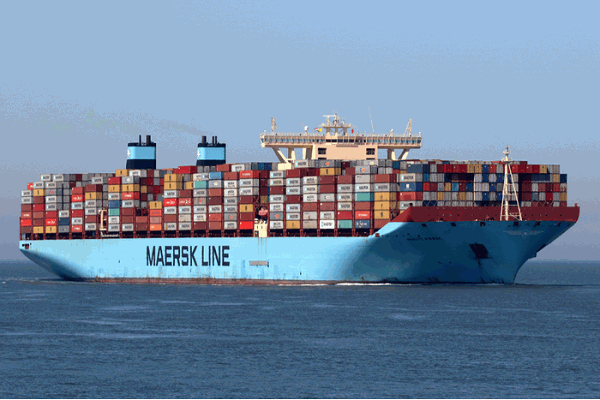 How the Salman Canal Could Impact Indian Logistics, if operational?
 Govt of India approves Integrated Transport & Logistics Authority to drive Multimodal Planning
 PCMC approves ₹85 Lakh for DPR of Maharashtra’s First e-RTS Pilot Corridor
 Visakhapatnam partners with Moscow to build Technology-Driven Urban Transport System
 Biofuels in Shipping: A Transitional Solution or Long-Term Strategy?
 8 Reasons Why Trains Are Still One of the Best Ways to Travel
 Interview with Champak Panda, MD-Rolling Stock & Components, Alstom India
 Beyond the Tailpipe: The Case for African Electric Mass Transit
 A Rejected Claim Is Not Always the End, What Car Owners Can Do Next?
How the Salman Canal Could Impact Indian Logistics, if operational?
UTN Online Desk
Posted on: 2026-10-06 16:54:00
Viewer: 124
Comments: 0
Country: India
City: New Delhi
The proposed Salman Canal is a conceptual Saudi Arabian megaproject that has been discussed as a possible artificial waterway connecting the Arabian Gulf with the Red Sea. It has been described in various reports that this canal of roughly 950–960 km, intended to provide an alternative maritime route to the Strait of Hormuz. But it is important to note that the project remains conceptual rather than an operational or confirmed shipping route.
For India, such a project could have significant implications for logistics, energy security and trade—particularly because India has extensive commercial links with the Gulf, Europe and the wider Middle East.
A functioning Salman Canal could create an alternative maritime connection between the Gulf and the Red Sea. This could potentially allow some vessels travelling between Gulf ports and the Red Sea to avoid the Strait of Hormuz.
For Indian logistics, the significance would depend heavily on the canal's final design, tolls, vessel, port connections and whether shipping companies actually adopted the route. India's western ports including those on the Gujarat coast are closely connected to Gulf trade. A new Saudi maritime corridor could therefore influence how cargo moves between India, the Gulf and markets farther west.
One of the biggest potential advantages for India would be route diversification. International supply chains can be disrupted by geopolitical tensions, accidents, congestion or security problems at strategic maritime chokepoints. An additional Gulf–Red Sea route could give shipping companies another option.For Indian exporters and importers, this could mean greater flexibility in designing shipping networks. Instead of depending on a single strategic passage, logistics companies could potentially evaluate multiple routes according to cost, security and transit time.
The emergence of a major Saudi maritime corridor could increase the importance of ports on India's western coast. The Ports in Gujarat and other western coastal regions already have strong connections with Middle Eastern markets. If Saudi Arabia developed major ports, logistics parks and industrial zones around the canal, Indian ports could potentially establish stronger feeder, transhipment and direct-cargo relationships with them. This could also encourage investment in Container terminals, Warehousing, Cold-chain infrastructure, Coastal shipping, Multimodal logistics parks, Rail and road connections to ports. The impact would therefore extend beyond shipping to the wider Indian logistics ecosystem.
The Red Sea is an important gateway toward the Suez Canal and European markets. If the Salman Canal provided a practical alternative route between the Gulf and Red Sea, it could reshape some regional cargo flows. However, the canal would not automatically make Indian exports faster or cheaper. The economic benefit would depend on total voyage distance, canal fees, vessel capacity, port handling costs and connections with India's own ports.
This is to be noted that India is one of the world's major energy importers, and the Gulf is a critical source of crude oil and other energy supplies. An alternative Gulf–Red Sea maritime connection could potentially provide another logistics option for energy movements. In a disruption affecting existing maritime routes, additional infrastructure could improve the resilience of regional energy supply chains.
Saudi Arabia is already developing its logistics infrastructure under its broader economic diversification programme. For example, SAL Logistics Services announced a 2026 memorandum with King Salman Energy City Dry Port covering potential cooperation in cargo handling, warehousing, transportation and supply-chain services. The canal could potentially strengthen Saudi Arabia's role as a logistics bridge between Asia, the Gulf and the Red Sea. That could create opportunities for deeper India–Saudi Arabia economic integration. Indian companies could use Saudi Arabia not only as a destination market but also as a distribution and manufacturing base for the Middle East and potentially parts of Africa and Europe, if Saudi Arabia develops logistics zones, industrial clusters and multimodal connections around the canal.
The Salman Canal remains a conceptual proposal, and reports about its dimensions and cost are not evidence that construction has been approved or that the canal will be built. There would also be major challenges such as extremely high construction cost, complex desert engineering, water-management and environmental issues, canal maintenance and operating costs, Security considerations etc.
The Salman Canal, if ever constructed and commercially viable, could become an important development for the logistics geography of the Arabian Gulf and the Red Sea. For India, its greatest potential significance would be in supply-chain diversification, western-port connectivity, energy logistics and deeper integration with Saudi Arabia's emerging logistics network.
This article is authored by Dr. Priyanka Kumar, currently service at Gujarat Infrastructure Development Board.


UTN Online Desk
Urban Transport News provides real-time updates for all modes (Railways, Roadways, Waterways & Airways) of the Transportation and Urban Infrastructure Industry.