


Trending Now
 PCMC approves ₹85 Lakh for DPR of Maharashtra’s First e-RTS Pilot Corridor
 Visakhapatnam partners with Moscow to build Technology-Driven Urban Transport System
 Biofuels in Shipping: A Transitional Solution or Long-Term Strategy?
 8 Reasons Why Trains Are Still One of the Best Ways to Travel
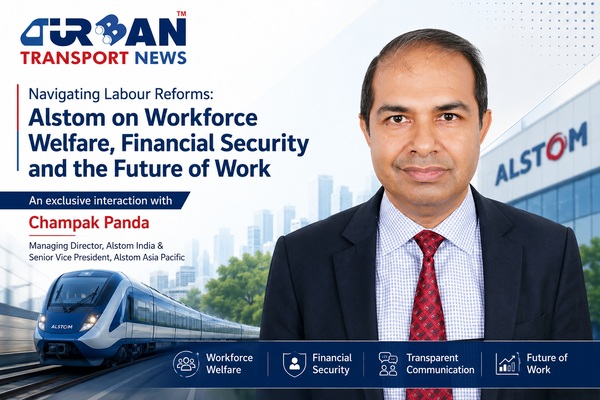 Interview with Champak Panda, MD-Rolling Stock & Components, Alstom India
 Beyond the Tailpipe: The Case for African Electric Mass Transit
 A Rejected Claim Is Not Always the End, What Car Owners Can Do Next?
 Monsoon Bike Insurance Guide: Covers That Matter before the Rains Begin
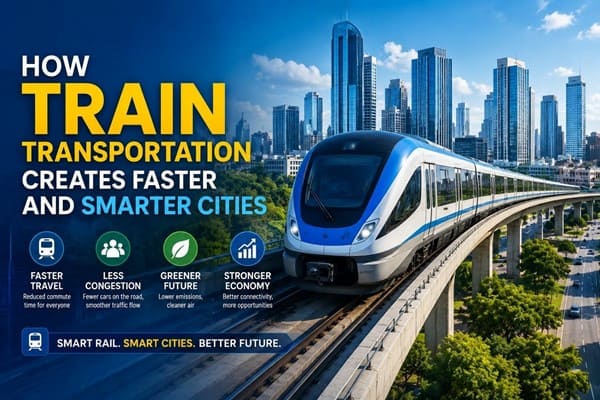 How Train Transportation Creates Faster and Smarter Cities
 PM Modi inaugurates Noida International Airport, Boosting North India’s Multi-Modal connectivity
Know all about 119 km Bangalore-Mysore Expressway built on NH-275 in Karnataka
Mamta Shah
Posted on: 2023-03-11 08:10:00
Viewer: 20,398
Comments: 0
Country: India
City: Bengaluru
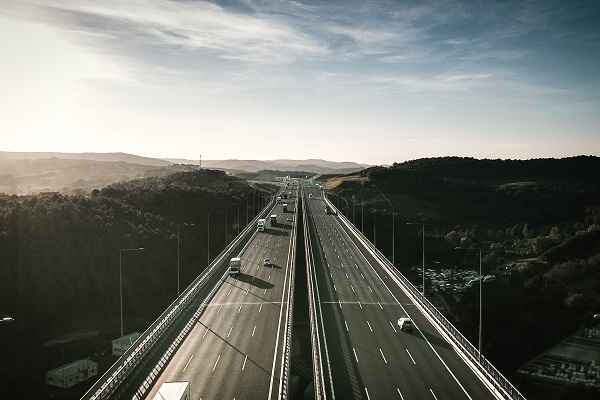
The 119 kilometres long, access-controlled Bangalore - Mysore Expressway has been built on National Highway (NH-275) in Karnataka state of India. This expressway will be inaugurated by Prime Minister Narendra Modi on 12th March 2023. Once become operational, it will take a little over 3 hours to cover the journey between Bangalore and Mysore in Karnataka. The ambitious 10-lane expressway on NH-275 between Bengaluru and Mysore will cut the distance in half.
Bangalore and Mysore are one of the most significant cities in the Karnataka, valuable for both business and tourism. The currently used 4-lane NH-275 is one of the significant highways in the state. The route, however, is congested and traverses through populated localities Mandya, Maddur and Srirangapatna.
The Bangalore - Mysore expressway is a part of the NH-275 and it will link Bangalore to Kodagu, Mangaluru, and Kerala regions. The expressway is built in two phases at an investment of around Rs 8,066 crore. Towns along the existing route will be avoided via a 51 km-long bypass road, which will be fenced on each side.
The Bangalore-Mysore expressway will reduce travel time between the major cities of Karnataka to less than 90 minutes from the current 3 hours.
Key Information
-
Estimated cost of the project: Rs 8,066 crore
- Original deadline: June 2022
-
Date of completion: October 2022
-
Roadway length: 119 km
-
Total Lanes: 6 to 10
-
Owner: National Highway Authority of India (NHAI)
- Ministry: Ministry of Road Transport & Highways
-
Model: Hybrid Annuity Model (HAM)
The Bangalore-Mysore expressway project was proposed in 2014 and work on this project was started in two parts. The first part was started in May 2019 and on another part in December 2019.
The Bangalore-Mysore expressway includes 69 bus bays, 49 underpasses, 13 overpasses, and fencing on either side of the access-controlled, 6-lane roadway to provide a free and uninterrupted trip.
There will be a 22 km bypass for Ramanagaram and Channapatana combined, an 8 km bypass for Mandya, a 10 km bypass for Srirangapatana, and a 4 km bypass for Maddur. Additionally, Bidadi will have a 7 km bypass, and commuters travelling between the two cities can skip all these major towns.
Development Phases
The project is developed in two packages simultaneously. In addition to 4 ROBs (railway overbridges), the expressway will have 44 small bridges, 19 large bridges, and 44 micro bridges. It will also have 50 underpasses for pedestrians and vehicles.
Phase 1: The first phase is Bangalore and connects Panchamukhi Ganapathi Temple on NICE Road to Nidaghatta. The first phase will cost a total of Rs 3,900 crore, of which Rs 1,600 crore is assigned for land acquisition. The road length of this phase is around 56.2 km.
Phase 2: The second phase runs from Nidaghatta to Mysore. With a road length of 61.1 km and an estimated price of around Rs 3,600 crore, the second package includes a Rs 1,200 crore cost for land acquisition.
NHAI awarded two-package contract to Dilip Buildcon Ltd for construction of Bangalore-Mysore expressway. The package 1 covers a total distance of 58 kilometres ( Bengaluru – Nidaghatta) while package 2 covers 61 kilometres Nidaghatta – Mysore.


Mamta Shah
Mamta Shah is the Managing Director (MD) and Chief Executive Officer (CEO) of Urban Infra Group. She also acts as Managing Editor of all publications i.e. Urban Transport News and Metro Rail Today.