

Trending Now
 PCMC approves ₹85 Lakh for DPR of Maharashtra’s First e-RTS Pilot Corridor
 Visakhapatnam partners with Moscow to build Technology-Driven Urban Transport System
 Biofuels in Shipping: A Transitional Solution or Long-Term Strategy?
 8 Reasons Why Trains Are Still One of the Best Ways to Travel
 Interview with Champak Panda, MD-Rolling Stock & Components, Alstom India
 Beyond the Tailpipe: The Case for African Electric Mass Transit
 A Rejected Claim Is Not Always the End, What Car Owners Can Do Next?
 Monsoon Bike Insurance Guide: Covers That Matter before the Rains Begin
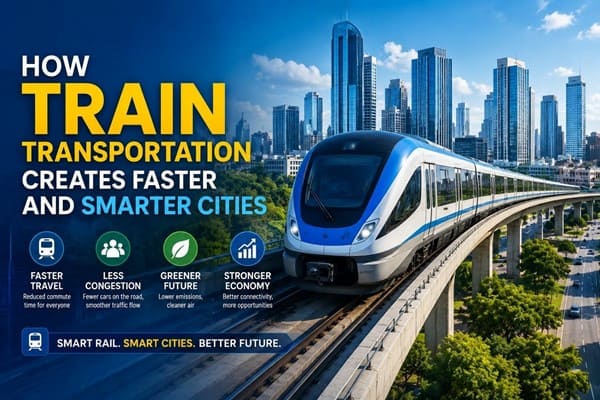 How Train Transportation Creates Faster and Smarter Cities
 PM Modi inaugurates Noida International Airport, Boosting North India’s Multi-Modal connectivity
Indian Railways to procure 600 high speed push-pull Electric Locomotives
Anushka Khare
Posted on: 2023-11-14 06:10:00
Viewer: 9,305
Comments: 0
Country: India
City: New Delhi
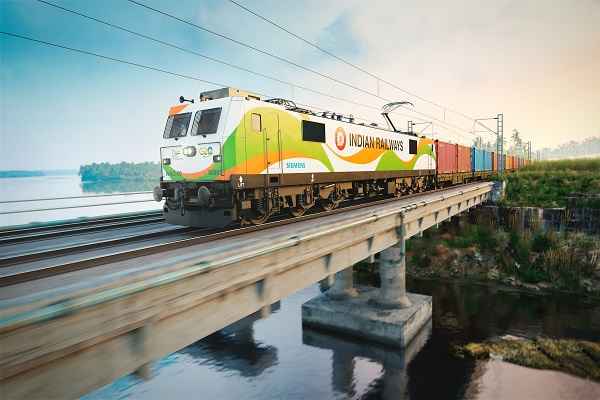
New Delhi, India (Urban Transport News): In a groundbreaking move, Indian Railways is gearing up to redefine its operational capabilities with the procurement and maintenance of 600 cutting-edge electric locomotives. This strategic initiative, expected to cost approximately Rs 15,000 crore, is poised to revolutionize passenger and freight services, targeting speeds of 160 kmph for passenger trains and 100 kmph for goods trains. The tender for this ambitious project has been unveiled to introduce the push-pull system on the pivotal Delhi-Mumbai and Delhi-Howrah routes.
A cornerstone of this transformative project is the development of high-horsepower push-pull locomotives, each boasting a robust 6,000 horsepower capacity. Manufactured at Banaras Locomotive Works (BLW) in Varanasi, this endeavor is a significant boon for the factory, which will play a key role in the production of 500 push-pull locomotives for freight services and 100 for passenger trains.
The push-pull system, a testament to innovation in the rail industry, involves deploying two locomotives at both ends of a train. Operating seamlessly with a single command system, this approach facilitates higher acceleration and deceleration. The outcome is a reduction in detention time at stations, ultimately enhancing the overall turnaround time for trains.
The financial landscape of this endeavor indicates a substantial investment, with each fully electrified push-pull locomotive anticipated to cost around Rs 12 crore. Notably, BLW, as the manufacturer, will bear the responsibility for maintenance for an impressive 35 years. This long-term commitment underscores the confidence placed in the durability and reliability of the locomotives produced under this initiative.
This strategic move by Indian Railways aligns seamlessly with its broader commitment to modernize its fleet and elevate operational efficiency, particularly on key routes. The upcoming tender, scheduled to open early next year, is expected to attract major players in the rolling stock industry, marking a collaborative effort towards advancing the nation's railway infrastructure.
In conclusion, the advent of 600 high-speed electric locomotives marks a pivotal moment in the evolution of Indian Railways. Beyond the numbers and financial investments, this initiative symbolizes a commitment to transforming connectivity, fostering innovation, and setting new standards in operational efficiency. As the railway landscape undergoes this significant metamorphosis, it heralds a promising era for passengers and freight transport in India.


Anushka Khare
Anushka Khare is a Post Graduate in Journalism from Makhanlal Chaturvedi National University of Journalism and Communication, Bhopal (MP). She covers stories and updates from India.