

Trending Now
 Govt of India approves Integrated Transport & Logistics Authority to drive Multimodal Planning
 PCMC approves ₹85 Lakh for DPR of Maharashtra’s First e-RTS Pilot Corridor
 Visakhapatnam partners with Moscow to build Technology-Driven Urban Transport System
 Biofuels in Shipping: A Transitional Solution or Long-Term Strategy?
 8 Reasons Why Trains Are Still One of the Best Ways to Travel
 Interview with Champak Panda, MD-Rolling Stock & Components, Alstom India
 Beyond the Tailpipe: The Case for African Electric Mass Transit
 A Rejected Claim Is Not Always the End, What Car Owners Can Do Next?
 Monsoon Bike Insurance Guide: Covers That Matter before the Rains Begin
 How Train Transportation Creates Faster and Smarter Cities
NCRTC launches AFC System contract for Delhi-Meerut RRTS Project
Anushka Khare
Posted on: 2021-06-02 09:26:00
Viewer: 6,677
Comments: 0
Country: India
City: New Delhi
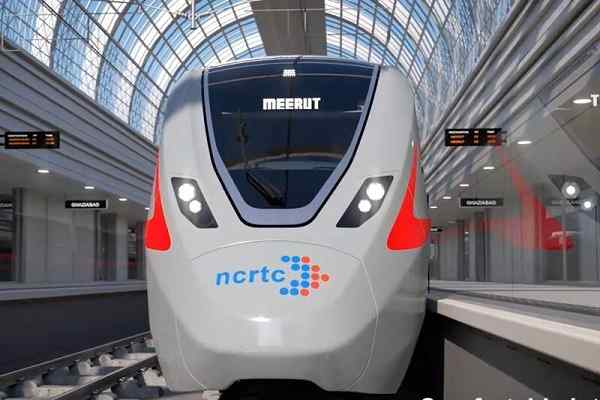
New Delhi, India (Urban Transport News): The National Capital Region Transport Corporation (NCRTC) on May 26, 2021, has issued an e-tender notice for the supply (including Comprehensive Annual Maintenance Contract) of EMV based Open Loop Automatic Fare Collection (AFC) System for 82.15 km Delhi- Meerut RRTS Corridor.
Scope of Work
Package 26A Design, Supply, Installation, Testing and Commissioning and Comprehensive Annual Maintenance Contract of EMV based Open Loop Automatic Fare Collection (AFC) System for Delhi Ghaziabad Meerut RRTS Corridor of NCRTC.
Key Information
- Tender Notice No. DM/ST/COR-OF/142
- Issue Date: 26.05.2021
- Work Completion Period: 1240 days
- Pre-bid Meeting Date: 11.06.2021 at 1500 hrs.
- Bid Submission Dates: 20.07.2021 - 27.07.2021
- Opening Date of Technical Bids: 28.07.2021 at 1500 hrs.
- Contact Person: Group General Manager/Procurement, National Capital Region Transport Corporation Ltd., 7/6, Siri Fort Institutional Area, August Kranti Marg, New Delhi – 110049.
EMV based Open Loop AFC System
The EMV based Open Loop Automatic Fare Collection (AFC) System is a ‘ticketless’ way of allowing people to travel on public transport. This system enables passengers to simply tap or scan a secure token (contactless bank card, phone or smartcard), linked to an account in the back-office to make a journey. Account-Based Ticketing means that riders no longer need to buy a ticket in advance or understand fares before traveling. The fare is automatically calculated based on a number of factors, such as location and amount of taps during a time window, and is then charged to the passenger post journey.
About the project
The 82.15 km long Delhi-Meerut RRTS Corridor will connect Delhi to Meerut with 24 stations including 8 metro stations to be built under Meerut Metro Rail Project. This is India’s first RRTS corridor to be implemented in India.
RRTS stations would be integrated with various modes of transport like Airport, Indian Railway Stations, Inter-State Bus Terminus, Delhi Metro Stations etc. It will facilitate the seamless movement of commuters from one mode to another. Seamless integration between different modes of transport encourages people to use public transport.


Anushka Khare
Anushka Khare is a Post Graduate in Journalism from Makhanlal Chaturvedi National University of Journalism and Communication, Bhopal (MP). She covers stories and updates from India.