

Trending Now
 PCMC approves ₹85 Lakh for DPR of Maharashtra’s First e-RTS Pilot Corridor
 Visakhapatnam partners with Moscow to build Technology-Driven Urban Transport System
 Biofuels in Shipping: A Transitional Solution or Long-Term Strategy?
 8 Reasons Why Trains Are Still One of the Best Ways to Travel
 Interview with Champak Panda, MD-Rolling Stock & Components, Alstom India
 Beyond the Tailpipe: The Case for African Electric Mass Transit
 A Rejected Claim Is Not Always the End, What Car Owners Can Do Next?
 Monsoon Bike Insurance Guide: Covers That Matter before the Rains Begin
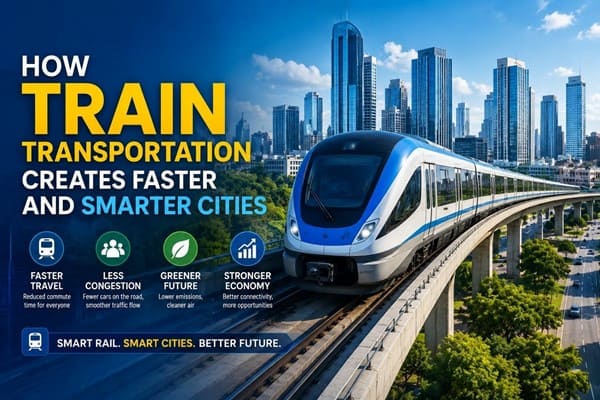 How Train Transportation Creates Faster and Smarter Cities
 PM Modi inaugurates Noida International Airport, Boosting North India’s Multi-Modal connectivity
NHAI signs MoU with IIT-Hyderabad for infra boost to national highways in India
Naomi Pandya
Posted on: 2022-07-12 09:50:00
Viewer: 4,746
Comments: 0
Country: India
City: Hyderabad

Hyderabad, India (Urban Transport News): The National Highways Authority of India (NHAI) has entered into a Memorandum of Understanding (MoU) with the Indian Institute of Technology - Hyderabad (IIT-H) to establish a Transportation Research and Innovation Hub (TRI Hub), a Centre of Excellence, which would work on contemporary and cutting-edge technologies for national highways in India.
“This is one of the pioneering initiatives of NHAI to support state-of-the-art research in transportation through a Centre of Excellence,” said Kiran Kuchi, Dean (R&D), IIT-Hyderabad. We are confident in demonstrating new technologies in pavements and bridge infrastructure in partnership with IIT-H.
“The new hub is possibly the first-of-its-kind in an IIT system, will complement the recently-inaugurated test bed for the Technology Innovation Hub for Autonomous Navigation and Data Acquisition Systems (TiHAN) at the institute in demonstrating innovative technologies. In addition, it is going to bring a number of innovative technologies in the field of transportation,” said B.S. Murty, Director, IIT-Hyderabad.
“We are resolute in achieving the project deliverables in time and demonstrating new technologies and methodologies to build smart and sustainable national highways. The new methodologies, including geosynthetics, reclaimed materials, glass fibre reinforced polymer (GFRP), rebars for bridges and pavements, and retrofitting strategies for aging bridges, among other solutions, are going to provide long-lasting and sustainable highway infrastructure,” commented Sireesh Saride, Professor of Civil Engineering and Chair, TRI hub.
As part of this, professors Suriya Prakash S, Umashankar B, Mahendra Kumar Madhavan, Munwar Basha and Anil Agarwal, would work with Saride on 10 different innovative projects to deliver the objectives.


Naomi Pandya
Naomi is associated with Urban Transport News since its inception. She is working as a Corporate News Reporter.