

Trending Now
 Govt of India approves Integrated Transport & Logistics Authority to drive Multimodal Planning
 PCMC approves ₹85 Lakh for DPR of Maharashtra’s First e-RTS Pilot Corridor
 Visakhapatnam partners with Moscow to build Technology-Driven Urban Transport System
 Biofuels in Shipping: A Transitional Solution or Long-Term Strategy?
 8 Reasons Why Trains Are Still One of the Best Ways to Travel
 Interview with Champak Panda, MD-Rolling Stock & Components, Alstom India
 Beyond the Tailpipe: The Case for African Electric Mass Transit
 A Rejected Claim Is Not Always the End, What Car Owners Can Do Next?
 Monsoon Bike Insurance Guide: Covers That Matter before the Rains Begin
 How Train Transportation Creates Faster and Smarter Cities
India places World’s First Live Commercial Order for Hyperloop-Based Cargo Logistics
Anushka Khare
Posted on: 2026-01-23 07:15:00
Viewer: 13,765
Comments: 0
Country: India
City: Kandla
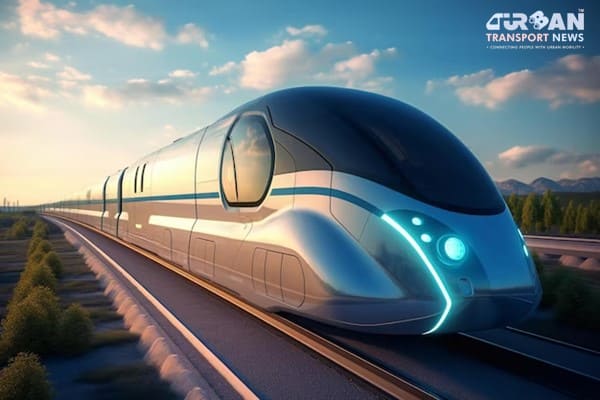
Kandla, India (Urban Transport News): In a landmark moment for next-generation freight transport, India has become the first country in the world to move hyperloop-based logistics from experimental pilots to live commercial deployment. The Deendayal Port Authority (DPA) at Kandla has awarded a ₹8.7 crore contract to TuTr Hyperloop, an IIT Madras–incubated startup, to implement an ultra-fast internal cargo movement system within the port premises.
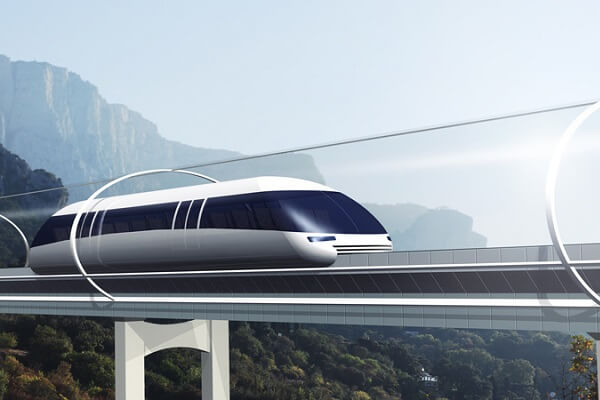
Under the project, TuTr Hyperloop will design, deploy and operate an electromagnetic cargo transport solution capable of moving 40-tonne containers directly from vessels at berth to internal storage and loading zones located several kilometres inland. The system is engineered to operate at speeds of up to 200 kmph, dramatically reducing cargo evacuation time compared to conventional truck and rail movements inside congested port areas.
Internal cargo evacuation has long been a critical bottleneck at Kandla, where freight often needs to travel three to eight kilometres from quayside to road and rail interfaces. Saturated truck traffic and limited rail siding capacity frequently slow vessel turnaround. The new system will create a dedicated high-speed freight corridor, bypassing these operational constraints.
In its first phase, the system will use linear induction motor (LIM) technology, where cargo pods are electromagnetically propelled along a guideway without conventional traction. Though not initially levitating, the system is designed for harsh port environments, including dust, salt exposure and vibration. Each pod will handle 40–100 tonnes, enabling transport of containers as well as challenging break-bulk cargo such as timber.
TuTr Hyperloop plans to subsequently demonstrate full magnetic levitation at Kandla, with the guideway and vehicle architecture already designed for a seamless transition from wheeled LIM operation to contactless levitation—significantly reducing long-term maintenance and mechanical wear.
The cargo pods will be battery-powered, with charging supported by solar installations within the port, aligning the project with DPA’s sustainability and decarbonisation goals.
Encouraged by the Kandla breakthrough, TuTr Hyperloop is in advanced discussions with Jawaharlal Nehru Port Authority and Kolkata Port Authority for similar deployments. Successful execution across ports with diverse operating conditions could pave the way for large-scale adoption across India’s maritime network.
With this project, Kandla becomes the first Indian port to deploy an indigenously developed electromagnetic cargo transport system, validated through extensive 3D scale-model testing. Globally, hyperloop technology has largely remained confined to laboratories and test tracks—making India’s move a decisive leap toward real-world commercialisation.
Reacting to the development, Mrs. Mamta Shah, MD & CEO, Urban Infra Group, said: “This is a defining moment not just for Indian ports, but for global freight innovation. By adopting an indigenously developed hyperloop-based cargo system, India is demonstrating how cutting-edge technology can directly solve real operational bottlenecks. Projects like Kandla show that future logistics will be faster, cleaner and smarter—and India is clearly setting the pace.”
The Kandla contract positions India at the forefront of commercial hyperloop logistics, transforming what was once a futuristic concept into an operational reality.


Anushka Khare
Anushka Khare is a Post Graduate in Journalism from Makhanlal Chaturvedi National University of Journalism and Communication, Bhopal (MP). She covers stories and updates from India.