

Trending Now
 PM Modi inaugurates Noida International Airport, Boosting North India’s Multi-Modal connectivity
 Things You Can Do While on Long Train Rides: Stay Productive, Relaxed, and Entertained
 Rail Chamber launches 2026–27 National Membership Drive to strengthen Asia’s Railway Ecosystem
 North-South Commuter Railway (NSCR): Modern Train Network Connecting Luzon Island
 India launched Bharat Taxi Service as First Cooperative-Owned Digital Mobility Platform
 India places World’s First Live Commercial Order for Hyperloop-Based Cargo Logistics
 How Weigh-in-Motion Systems Are Revolutionizing Freight Safety
 Women Powering India’s Electric Mobility Revolution
 Rail Chamber Launched to Strengthen India’s Global Railway Leadership
 Wage and Hour Enforcement Under the Massachusetts Wage Act and Connecticut Labor Standards
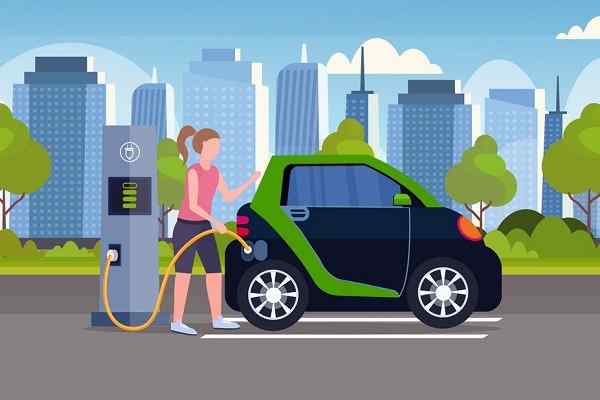
Women Powering India’s Electric Mobility Revolution
Naomi Pandya
Posted on: 2025-12-22 07:25:00
Viewer: 10,151
Comments: 0
Country: India
City: New Delhi
India’s transition to electric vehicles (EVs) is frequently characterized as a technological shift, yet its defining feature is the leadership driving it. As the nation targets 30% EV penetration by 2030, the sector is evolving from a reliance on subsidies toward a focus on scale, profitability, and integrated systems. At the heart of this revolution are women leaders who are redefining how electric mobility is engineered, financed, and deployed across the country.
Scaling Through Livelihoods: Suman Mishra
In the critical last-mile transport segment, Suman Mishra, Managing Director and CEO of Mahindra Last Mile Mobility (MLMML), has demonstrated that commercial electrification can be both scalable and profitable. By anchoring the transition in driver livelihoods and the Total Cost of Ownership (TCO), Mishra has scaled operations to over 300,000 units. Her leadership has positioned MLMML as the backbone of commercial electrification, dominating the electric three-wheeler and last-mile logistics markets.
Redefining Heritage for "Bharat": Sulajja Firodia Motwani
Sulajja Firodia Motwani, Founder and CEO of Kinetic Green, is leveraging legacy brand recognition to reach deeper into Tier-2 and Tier-3 India. By transforming Kinetic Green from a B2B-focused player into a mass-market EV company, she is proving that nostalgia and affordability can coexist with modern technology. Her "Bharat-focused" strategy, exemplified by the E-Luna, focuses on taking EVs to the heart of the country.
Indigenous Innovation and Deep-Tech: Madhumita Agrawal
On the frontier of indigenous hardware, Madhumita Agrawal, Founder and CEO of Oben Electric, is challenging the traditional assembly-led model of Indian startups. Her approach prioritizes in-house R&D, building motorcycles, batteries, and motors from the ground up. Agrawal’s focus on "tropicalized engineering" and safety-first LFP (Lithium Iron Phosphate) chemistry represents the deep-tech future of India's EV industry.
Market Reshaping and Financial Innovation: Mahua Acharya
Mahua Acharya, Founder and CEO of the International Energy Transition Platform (INTENT) and former MD and CEO of Convergence Energy Services Limited (CESL), has fundamentally reshaped the EV market. Through demand aggregation and financial innovation, she successfully made electric buses more cost-effective than diesel alternatives at scale. Her work focuses on solving the complex problem of mobility scale through comprehensive systems thinking.
Economics of Mass Mobility: Dr. Aanchal Jain
Completing this leadership ecosystem is Dr. Aanchal Jain, CEO of PMI Electro Mobility. Bringing global economics expertise to the sector, Dr. Jain addresses the significant capital-intensity challenges inherent in scaling electric commercial vehicles. Under her leadership, PMI Electro Mobility operates one of India's largest e-bus fleets, with over 1,180 buses across 28 cities, turning mass electric mobility into a commercially viable reality.
A New Leadership Model for a Global Transition
What unites these five leaders is a shared commitment to the Total Cost of Ownership, ecosystem-wide thinking, and resilience beyond government subsidies. They are moving the industry toward a model rooted in industrial pragmatism and inclusion. This women-led leadership may ultimately become India’s most powerful competitive advantage as it strives to lead the global energy transition.


Naomi Pandya
Naomi is associated with Urban Transport News since its inception. She is working as a Corporate News Reporter.