

Trending Now
 PM Modi inaugurates Noida International Airport, Boosting North India’s Multi-Modal connectivity
 Things You Can Do While on Long Train Rides: Stay Productive, Relaxed, and Entertained
 Rail Chamber launches 2026–27 National Membership Drive to strengthen Asia’s Railway Ecosystem
 North-South Commuter Railway (NSCR): Modern Train Network Connecting Luzon Island
 India launched Bharat Taxi Service as First Cooperative-Owned Digital Mobility Platform
 India places World’s First Live Commercial Order for Hyperloop-Based Cargo Logistics
 How Weigh-in-Motion Systems Are Revolutionizing Freight Safety
 Women Powering India’s Electric Mobility Revolution
 Rail Chamber Launched to Strengthen India’s Global Railway Leadership
 Wage and Hour Enforcement Under the Massachusetts Wage Act and Connecticut Labor Standards
L&T commences construction activities on Delhi-Meerut RRTS corridor
Anushka Khare
Posted on: 2020-07-08 15:41:40
Viewer: 2,106
Comments: 0
Country: India
City: New Delhi
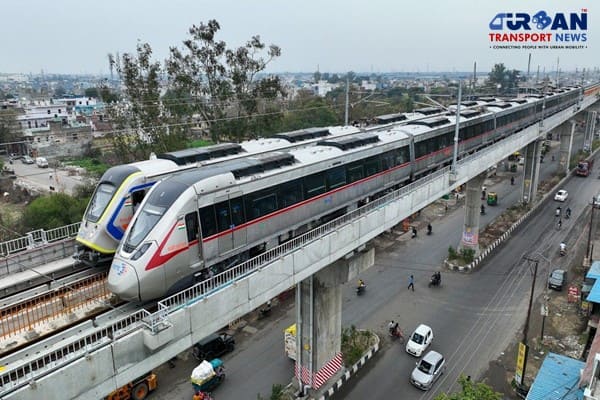
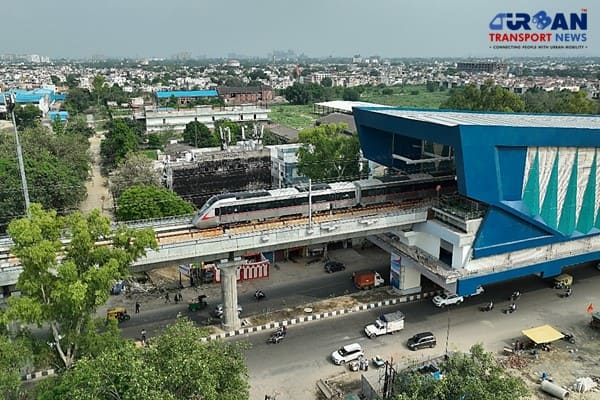
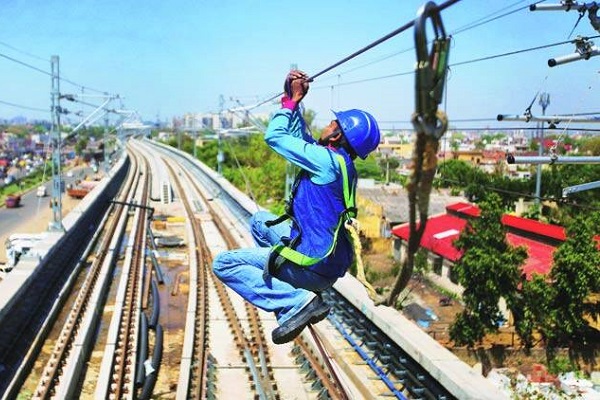
Meerut, India (Urban Transport News): National Capital Region Transport Corporation (NCRTC) has geared up construction activities on Delhi-Ghaziabad-Meerut RRTS corridor. Larsen & Tubro today kickstarted the foundation work in Modinagar and Shatabdi Nagar in Meerut under contract package 3 works. With this main construction work for other than the priority section of Sahibabad to Duhai has started.
L&T is constructing the elevated viaduct from Duhai (EPE) to Modi Nagar North with 2 elevated stations, Murad Nagar & Modi Nagar South in package 3 (Lot 1) and elevated viaduct from the start of Modi Nagar North Station to Shatabdi Nagar Station with 5 elevated stations viz. Modi Nagar North, Meerut South, Partapur, Rithani & Shatabdi Nagar in Package 3 (Lot 2). It is also establishing a state-of-the-art casting yard at Shatabdi Nagar, Meerut.
[#RRTS Updates] Larsen & Tubro today kickstarted the foundation work in Modinagar and Shatabdi Nagar in Meerut under contract package 3 works. With this main construction work for other than the priority section of Sahibabad to Duhai has started.#BreakingNews #NCRTC #RRTS pic.twitter.com/8AaaaGi6UA
— Urban Transport News ? (@urbantransnews) July 8, 2020
Vinay Kumar Singh, Managing Director, NCRTC today inspected the ongoing works in the entire section along with this newly started construction work. Singh also overviewed various preparations done for Monsoon. He advised NCRTC engineers and the agency to ensure workers safety and convenience of local residents during construction while taking care of all essential precautions for COVID-19 as specified in the NCRTC issued Standard Operating Procedure. Singh has also visited the newly started NCRTC’s site office at Modinagar. This particular site office is constructed in a record time of less than four months during COVID-19 pandemic.
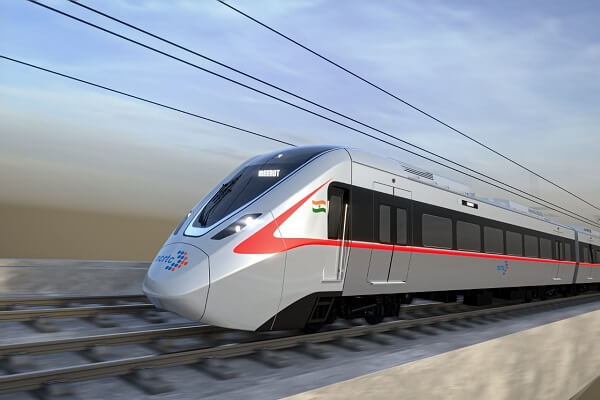
All the construction, electrical, signaling, and telecommunication work of the 33 km long stretch between Duhai to Shatabdi Nagar will be taken care by this office. India’s first regional rail - Delhi-Ghaziabad-Meerut RRTS is one of the three RRTS corridors prioritized for implementation.
The 82 km long corridor will have 24 stations including two depots at Duhai and Modipuram and the distance will be covered in less than one hour. The construction on this corridor is in full swing, the casting of segments for super structure is in progress at Vasundhara Casting yard.
The launching gantry (Tarini) 2.1 on package 2 is ready to launch first span of viaduct between Guldhar and Duhai, while the launching gantry Tarini 1.1 of package 1 is near completion to facilitate the erection of first span near Sahibabad station.
Construction of all the four stations of the priority section – Sahibabad, Ghaziabad, Guldhar, and Duhai is in progress. Electrical utility shifting work is in progress in Vaishali green belt, between EXP 1C to P1 (Total 32 span). A total of 23 EHT lines infringing the Delhi-Ghaziabad-Meerut RRTS Corridor have already been shifted/modified so far.
Road widening and utility diversion work are underway between Duhai to Modipuram. The pile load test between Duhai to Muradnagar has been completed. The civil construction work on the 82 Km-long Delhi- Ghaziabad-Meerut corridor of RRTS is expected to be completed by 2025.


Anushka Khare
Anushka Khare is a Post Graduate in Journalism from Makhanlal Chaturvedi National University of Journalism and Communication, Bhopal (MP). She covers stories and updates from India.