

Trending Now
 Interview with Champak Panda, MD-Rolling Stock & Components, Alstom India
 Beyond the Tailpipe: The Case for African Electric Mass Transit
 A Rejected Claim Is Not Always the End, What Car Owners Can Do Next?
 Monsoon Bike Insurance Guide: Covers That Matter before the Rains Begin
 How Train Transportation Creates Faster and Smarter Cities
 PM Modi inaugurates Noida International Airport, Boosting North India’s Multi-Modal connectivity
 Things You Can Do While on Long Train Rides: Stay Productive, Relaxed, and Entertained
 Rail Chamber launches 2026–27 National Membership Drive to strengthen Asia’s Railway Ecosystem
 North-South Commuter Railway (NSCR): Modern Train Network Connecting Luzon Island
- India launched Bharat Taxi Service as First Cooperative-Owned Digital Mobility Platform
Union Transport Minister Nitin Gadkari lays foundation stone for inland waterway
Anushka Khare
Posted on: 2018-10-17 10:03:53
Viewer: 2,015
Comments: 0
Country: India
City:
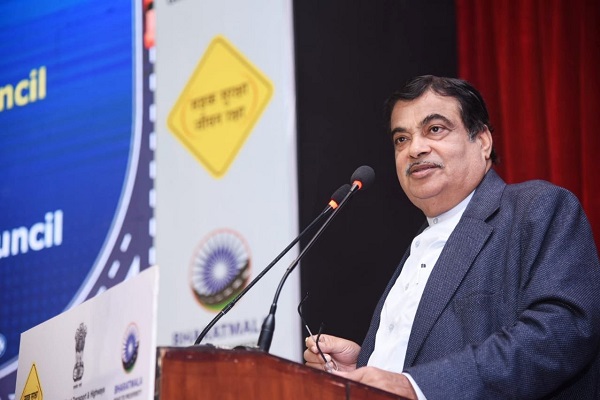
Tiruchirapalli/Urban Transport News: Recently, Union Minister for Shipping, Road Transport & Highways, Nitin Gadkari, laid the foundation stone for the development work of Ghagra River as National Waterway (NW) – 40. This will run from Manjhighat at Ganga-Gaghra river confluence to Faizabad/Ayodhya along Gaghra River for a length of 354 km. This project is part of the Modi government’s initiative to improve the inland waterway infrastructure in the country. Also, the current government has passed the National Waterways Act, 2016, which proposed to add 106 National Waterways, taking the total to 111. Apart from this, the government has also proposed an amendment to the Central Road Fund Act, 2000 by which 2.5 percent of the cess levied on high-speed petrol and for the development and maintenance of national waterways, diesel will be used.
The reason behind moving towards more on waterways is justified since waterways are cost-effective, environment-friendly and logistically efficient when compared to roads and railways. And also the cargo conveyance cost is lower because one horsepower of energy can ferry four tonnes by water, against only 150 kg by road and 500 kg by rail. But when talking about reality, despite such advantages, Inland water transport accounts for less than 1 percent of the total transport share. This entire adequacy in infrastructure partly explains why India’s logistics costs hover around 13 percent of the GDP, while it’s around 8 percent in Germany. Apart from this the development of Inland Waterways will also complement Sagarmala, which is an ambitious project launched by the NDA government.
The main motive of this flagship programme of the Shipping Ministry aims to promote a port-led development in the country by harnessing India’s 7,500-km-long coastline and the 15,500 km of potentially navigable waterways. The development of National Waterways will also enable the success of other Government of India schemes such as Make In India, Bharatmala, Startup India etc.


Anushka Khare
Anushka Khare is a Post Graduate in Journalism from Makhanlal Chaturvedi National University of Journalism and Communication, Bhopal (MP). She covers stories and updates from India.